
Dr. Gustavo de Andrade

Dr. Shen Dong
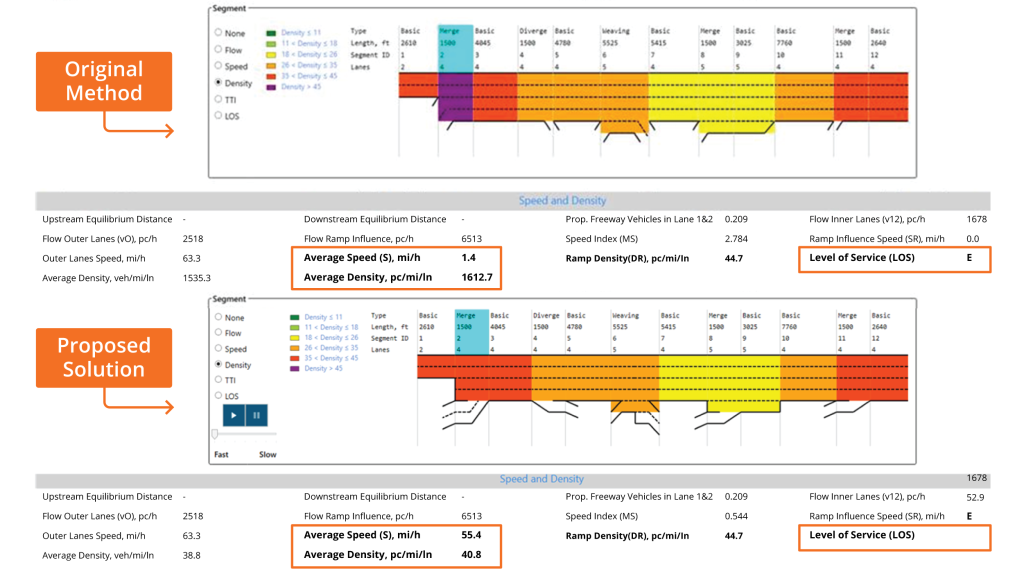
An exception to the merge method in the Highway Capacity Manual (HCM) was causing on-ramp average density to reach unrealistic high values for specific inputs despite the Level of Service (LOS) being correctly calculated, reported a Highway Capacity Software (HCS) user.
The engineering and development teams at the McTrans Center deeply analyzed the cause of this issue. They found that values of the flow rate entering the merge influence area (vR12) lower than the capacity but higher than “maximum desirable” could result in inconsistent density values for uncongested conditions. Note b on Exhibit 14-10 on the 7th Edition of HCM (page 14-23) warns the user about this limitation but provides no further guidance.
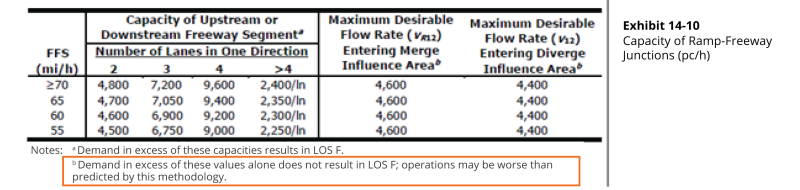
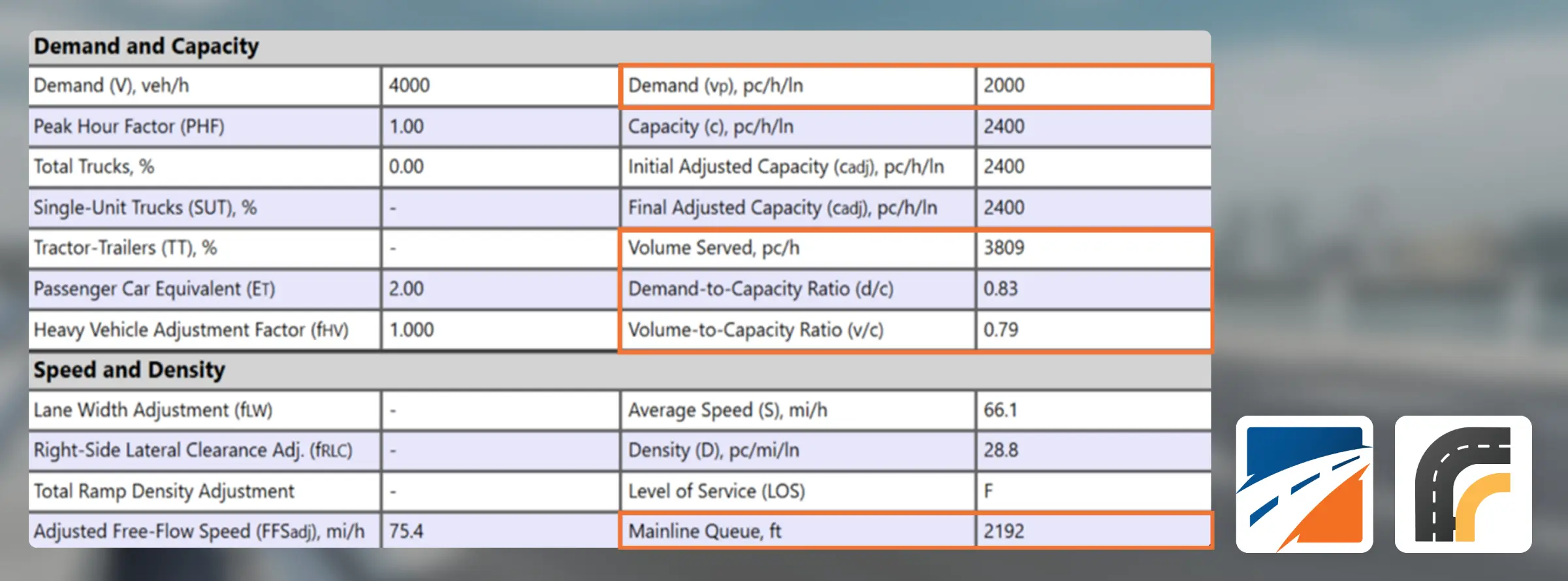
The solution proposed by the McTrans team delimits the boundary of VR12 to 4,600 pc/h to calculate the average speed on the ramp influence area. The proposed solution produced coherent values for the freeway facilities case study, which matched the user’s speed/density field measurement.
The Highway Capacity and Quality of Service Committee (HCQSC) approved this solution as an errata to be part of the HCM during the TRB’s 2021 Mid-Year Meeting by adding a note to Exhibit 14-13. We appreciate all the feedback and contributions from HCS users and the HCQSC members and friends for the consideration and thorough discussion.